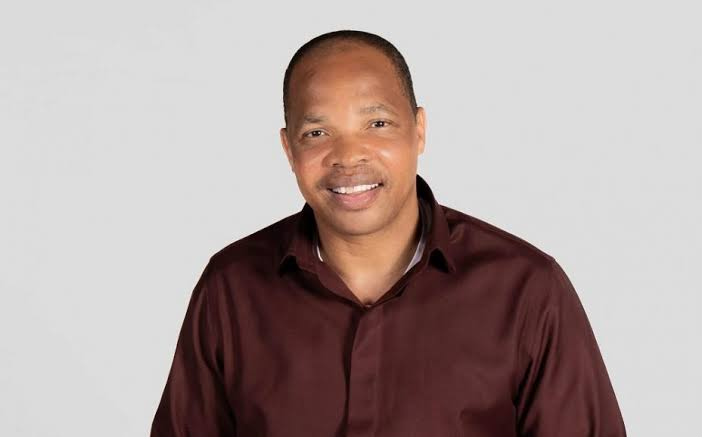
Introduction
The Owen Ndlovu biography is the story of a South African broadcaster, businessman, producer and music-rights activist whose career crossed the worlds of football, radio, television and entertainment. For many listeners, Ndlovu was first recognised through his work in sports broadcasting, particularly football. However, as his career developed, he became increasingly involved in production, business and advocacy for musicians and other creatives.
Ndlovu built a distinctive public identity through his work with the South African Broadcasting Corporation (SABC), his association with football programming and his production company, Michael Owen Productions. In addition, he became closely associated with the SABC’s Summer Song of the Year concept and later emerged as a prominent figure in disputes concerning intellectual property, royalties and the administration of music rights.
Sadly, the Owen Ndlovu biography took a tragic turn in September 2026. He was reportedly hijacked and kidnapped in Katlehong, Gauteng, while collecting his wife from church. His body was discovered in Thokoza the following morning, and police opened a murder investigation. Ndlovu was 54.
Nevertheless, his professional journey remains significant because he did much more than appear behind a microphone. He created programmes, developed commercial ventures, challenged powerful institutions and became involved in efforts to improve the treatment of artists within South Africa’s music industry.
This detailed Owen Ndlovu biography examines his early life, education, broadcasting career, businesses, achievements, family, net worth, controversies, music-rights activism, final years and legacy.
Quick Facts About Owen Ndlovu
| Category | Details |
|---|---|
| Full name | Owen Ndlovu |
| Nationality | South African |
| Country | South Africa |
| Place of origin | Rural KwaZulu-Natal, according to career profiles |
| Age at death | 54 |
| Year of death | 2026 |
| Date of death | 15 September 2026 attack; body found 16 September |
| Place of death | Thokoza, Ekurhuleni, Gauteng |
| Profession | Sports presenter, commentator, producer, businessman and music-rights activist |
| Known for | SABC Sport, football commentary, PSL radio programming and music advocacy |
| Production company | Michael Owen Productions |
| Advocacy organisation | Artists United |
| Wife | Portia Ndlovu |
| Music-rights connection | SAMRO member and activist |
| Famous association | SABC Summer Song of the Year |
| Known catchphrase | “Ubani ikhehla” |
| Cause of death | Reported gunshot wounds following hijacking and kidnapping; police investigation ongoing |
Contemporary reporting confirms that Ndlovu worked as an SABC sports presenter and commentator, while his production company was involved in Premier Soccer League radio programming.
Owen Ndlovu Early Life and Background
Any serious Owen Ndlovu biography must begin by acknowledging that relatively little verified information exists about his childhood. Unlike some prominent television personalities, Ndlovu did not leave behind a large publicly documented record detailing his birth date, parents, childhood home and school years.
Available career profiles, however, place his roots in rural KwaZulu-Natal. From those beginnings, he eventually entered South Africa’s vibrant radio and football culture before building a career in mainstream broadcasting.
That journey is important because Ndlovu’s later career reflected several aspects of South African popular culture. Radio gave him a platform to connect with large audiences, while football provided a subject that already had a deeply established following across the country.
Furthermore, his later work demonstrated that he understood the relationship between sport, entertainment, audiences and commercial opportunities. Rather than remaining solely a presenter, he gradually became involved in producing content and developing ideas around broadcasting.
Consequently, the Owen Ndlovu biography is not simply the story of someone who found fame through television. Instead, it is the story of a media professional who increasingly moved behind the scenes and sought greater control over the ideas and commercial projects associated with his work.
Owen Ndlovu Education
Information about Owen Ndlovu’s education remains limited in reliable publicly available sources.
Although various online biographies may claim specific schools, colleges or qualifications, the major contemporary reports published around his death do not provide a detailed educational history. Therefore, it would be inappropriate to invent a university degree, secondary school or professional qualification that cannot be independently verified.
What can be established is that Ndlovu developed substantial professional expertise through his work in broadcasting, production, sport and the entertainment industry. His career required communication skills, knowledge of radio production, audience engagement and an understanding of commercial partnerships.
Therefore, when discussing education in an Owen Ndlovu biography, the safest conclusion is that his formal educational background has not been sufficiently documented in reputable sources available at the time of writing.
Owen Ndlovu Age and Birth Information
Owen Ndlovu was 54 years old when he died in September 2026. Contemporary reports from SABC News and other South African publications identify him as 54.
His exact date of birth has not been consistently published by the major sources reporting his death. As a result, it is better to state his age rather than provide an unverified birth date.
His age also places much of his broadcasting career within a period when South African radio underwent considerable change. He worked across traditional radio, television, sports programming and later music advocacy, giving him experience across several stages of the country’s evolving media industry.
Owen Ndlovu Career in Broadcasting
The central chapter of the Owen Ndlovu biography concerns his broadcasting career.
Ndlovu became a familiar voice in South African sports media, particularly through his work with the SABC. He presented and commented on football and other sporting events, while his work also connected him to popular football programming.
One of the notable platforms associated with him was Ukhozi FM. He also became recognised through SABC1’s Coca-Cola Soccer Zone, where he provided humorous voice-overs. A 2010 Sowetan report described him as a soccer commentator for Ukhozi FM and a contributor to Coca-Cola Soccer Zone.
His approach to sports broadcasting was not purely analytical. Instead, he brought entertainment, humour and personality into his work. That style helped distinguish him from broadcasters whose approach focused primarily on match statistics and formal commentary.
Moreover, Ndlovu understood that football broadcasting could extend beyond the match itself. He explored the commercial and social possibilities surrounding the sport, eventually becoming involved in production and business ventures.
Michael Owen Productions and PSL Radio
Another major part of the Owen Ndlovu biography was his work through Michael Owen Productions, also referred to in reporting as Michael Owen Production.
The company became involved in SABC programming and Premier Soccer League radio initiatives. According to court-related reporting, Ndlovu had proposed establishing and producing a show called Premier League Sekunjalo and became involved in the implementation of an agreement between the SABC and the PSL.
The relationship eventually became financially contentious.
In 2017, Sowetan reported that Ndlovu was pursuing approximately R15 million from the SABC through his production company over unpaid invoices connected to work performed under an agreement. Ndlovu argued that his company had fulfilled its obligations while invoices covering several years remained unpaid.
The dispute continued into 2018, with reporting describing disagreements over the implementation of the SABC-PSL radio arrangement. Ndlovu said his company had helped implement the agreement, while the SABC’s relationship with the PSL subsequently deteriorated.
Importantly, these were disputed commercial and contractual matters. Therefore, they should not be presented as proof that either side was legally or morally responsible beyond what courts or documented findings established.
Owen Ndlovu and the SABC Summer Song of the Year
Perhaps the most famous controversy in the Owen Ndlovu biography involved the SABC Summer Song of the Year.
Ndlovu became associated with a voting-based music campaign that allowed radio listeners to participate in selecting a song of the year. The concept became particularly prominent through SABC radio stations, including Ukhozi FM.
A 2019 SABC report described the dispute that emerged between Ndlovu and the broadcaster over ownership of the concept. Ndlovu said he had partnered with the SABC in organising the event and accused the broadcaster of using his intellectual property.
The dispute escalated into legal proceedings.
In January 2020, City Press reported that Ndlovu had accused the SABC of excluding Michael Owen Productions from the campaign while continuing to use elements of the concept. Ndlovu argued that his contribution included listener voting, cash prizes and sponsorship arrangements.
However, the SABC rejected his interpretation. The broadcaster said its end-of-year song campaigns were not new and stated that the partnership with Ndlovu had ended. It also disputed his financial claims.
The legal challenge was eventually withdrawn in January 2020, meaning the existence of the dispute should not be confused with a final judicial finding that settled every aspect of Ndlovu’s intellectual-property claims. TimesLIVE reported that the production company withdrew the case, after which the SABC was no longer legally prevented from releasing the competition results.
Nevertheless, the episode became an important part of Ndlovu’s public identity. It demonstrated his willingness to challenge a major broadcaster and defend what he believed were his contractual and intellectual-property interests.
Owen Ndlovu Music Rights Activism
As his career progressed, Ndlovu’s interests expanded beyond sports.
He became increasingly involved in music-rights activism and eventually became associated with Artists United, where he served as a convener. His work focused heavily on royalty payments, transparency, governance and the treatment of musicians.
In November 2025, EWN reported that Artists United was working with artists and engaging with the Southern African Music Rights Organisation (SAMRO) over outstanding royalty payments. Ndlovu explained that the organisation was collecting information from artists to help address difficulties associated with royalty claims.
This represented a notable transition in his career.
Earlier, Ndlovu had primarily been recognised for sports broadcasting. Later, however, he increasingly became a public advocate for creatives. In doing so, he used the visibility and communication skills developed during his broadcasting career to participate in wider industry debates.
At the same time, his relationship with SAMRO became increasingly complicated.
Owen Ndlovu and SAMRO Controversies
The Owen Ndlovu biography also includes a substantial chapter involving SAMRO.
In 2025 and 2026, Ndlovu became involved in disputes with the organisation concerning governance, rights and his business relationship with SAMRO. SAMRO itself published statements addressing its disagreements with him, demonstrating that the conflict was not simply a one-sided public dispute.
In December 2025, Artists United pursued legal action connected with SAMRO’s planned Extraordinary General Meeting. The group argued that an online-only meeting could limit participation by members who lacked reliable internet access or sufficient data.
However, the Johannesburg High Court later dismissed the application. Reporting on the judgment stated that Artists United did not have the legal standing to make the demands it had presented to SAMRO.
That outcome is an important part of understanding Ndlovu’s activism. His campaign attracted attention and generated legal proceedings, yet not every legal argument associated with his movement succeeded in court.
Later, another legal dispute emerged.
In July 2026, the Johannesburg Magistrates’ Court dismissed a harassment application brought by SAMRO CEO Annabelle Lebethe against Ndlovu. According to reporting on the judgment, the court found that the evidence did not satisfy the legal threshold for a sustained pattern of harassment.
Because the wider dispute involved competing allegations and several separate proceedings, readers should distinguish carefully between allegations, court findings and statements made by the parties themselves.
Owen Ndlovu Wife and Family
Owen Ndlovu was married to Portia Ndlovu.
The couple had previously appeared together publicly in connection with Ndlovu’s business activities. In 2010, Sowetan reported on the couple’s involvement with The Change Room, a football-themed entertainment venue in Pimville, Soweto. Portia was identified as the person who would manage the establishment.
Their relationship therefore extended beyond private family life into some of Ndlovu’s business interests.
Sadly, Portia became directly connected to the circumstances surrounding his death.
According to police information reported by South African media, Ndlovu went to collect his wife from a church service in Katlehong on the evening of 15 September 2026. Three men reportedly approached the vehicle, and one was allegedly armed. Ndlovu was forced into the vehicle while his wife was pushed aside.
His Ford Raptor was later found abandoned in Walkerville, while residents discovered his body in Thokoza the following morning. Reports stated that he had sustained gunshot wounds.
His family subsequently appealed for privacy while authorities investigated the circumstances surrounding his death.
Publicly available reporting does not provide enough reliable information to detail all of Ndlovu’s relatives or children. Therefore, an accurate Owen Ndlovu biography should avoid presenting unverified family information as fact.
Owen Ndlovu Net Worth
Owen Ndlovu’s net worth has not been reliably disclosed by a credible public source.
Several internet biographies may attempt to attach a specific monetary figure to his wealth. However, there is no sufficiently authoritative financial record available to establish his personal net worth.
Consequently, it would be misleading to state that Owen Ndlovu was worth a particular amount.
What can be established is that he had several professional and commercial interests. These included broadcasting, production work, Michael Owen Productions and other ventures connected with sport and music.
The R15 million dispute involving the SABC should also not be interpreted as Ndlovu’s net worth. That figure related to a disputed commercial claim concerning invoices and contractual work.
Therefore, the responsible conclusion in an Owen Ndlovu biography is that his exact net worth remains publicly unverified.
Owen Ndlovu Business Ventures
Ndlovu’s entrepreneurial interests were an important extension of his media career.
Through Michael Owen Productions, he worked on radio and sports-related projects. Furthermore, he explored opportunities that connected football audiences with entertainment and commercial experiences.
One example was The Change Room in Pimville, Soweto. The venue was designed around football culture, with areas named after football terminology and multiple screens intended to create a football-focused entertainment environment. Portia Ndlovu was expected to manage the establishment.
These ventures show how Ndlovu attempted to convert his knowledge of sports audiences into business opportunities.
Rather than viewing broadcasting as an isolated profession, he treated media as a platform that could lead to production, events, sponsorships and entrepreneurship.
Owen Ndlovu Publications and Media Work
There is no well-established record of Owen Ndlovu publishing a conventional book or major standalone written publication.
His principal body of work existed instead through radio, television, production, interviews, campaigns and public advocacy.
He contributed to sports broadcasting, football commentary and radio production, while later appearances focused heavily on music rights and industry governance.
Consequently, searches for “Owen Ndlovu publications” should not automatically produce invented book titles or articles attributed to him. His media legacy primarily belongs to broadcast and production rather than traditional publishing.
Owen Ndlovu Awards and Achievements
There is also no sufficiently verified public record of a major individual award list for Ndlovu that can be presented confidently as fact.
Nevertheless, several professional achievements stand out.
First, he established himself as a recognised SABC sports broadcaster and commentator. Second, he became involved in PSL radio programming through his production company. Third, he played a significant role in the development and promotion of the Summer Song of the Year concept. Fourth, he later became a visible advocate for artists’ royalty and governance concerns.
A 2019 City Press report described him as the founder of the SABC Summer Song of the Year concept, while academic literature discussing South African radio has also identified Ndlovu as a businessman who introduced audience participation through the Summer Song of the Year concept.
Thus, his influence cannot be measured only through trophies or formal awards.
Owen Ndlovu Controversies
Controversy formed a recurring part of the later Owen Ndlovu biography, particularly because he repeatedly challenged major organisations.
The first major dispute involved SABC payments and production contracts. In 2017, he pursued a R15 million claim concerning unpaid invoices.
Next came the Summer Song of the Year intellectual-property dispute, in which Ndlovu accused the SABC of using his concept while the broadcaster disputed his claims. The legal challenge was ultimately withdrawn.
Later, his disagreements with SAMRO became another prominent public dispute. Artists United challenged aspects of SAMRO’s governance and meeting arrangements, although a December 2025 court application was dismissed.
Finally, in 2026, SAMRO CEO Annabelle Lebethe’s harassment application against Ndlovu was dismissed by the Johannesburg Magistrates’ Court.
These events demonstrate why a balanced Owen Ndlovu biography needs to distinguish between claims made by Ndlovu, responses from organisations and actual court outcomes.
Owen Ndlovu Death and Final Days
The final chapter of the Owen Ndlovu biography came unexpectedly in September 2026.
On Tuesday evening, 15 September, Ndlovu was reportedly in Katlehong to collect his wife from church. Police said three men approached the vehicle and forced him into his Ford Raptor. His wife was left behind.
The vehicle was subsequently located in Walkerville. On Wednesday morning, residents discovered Ndlovu’s body in Thokoza. Reports said he had suffered gunshot wounds, while his bag was found nearby.
The family confirmed his death, and police launched a manhunt for three suspects. At the time of the initial reports, the investigation remained ongoing.
Therefore, details surrounding the motive and the full circumstances of the killing should not be presented as established facts until investigators or courts provide further verified information.
His death generated reactions from people connected with both sport and music. Tributes highlighted his energetic personality, broadcasting career and advocacy for artists. Mail & Guardian described him as a colourful and energetic figure whose work touched the sporting and music worlds.
Owen Ndlovu Legacy
The legacy of Owen Ndlovu extends across several different fields.
First, there is his broadcasting legacy. He helped make football broadcasting entertaining and accessible to large audiences, particularly through SABC platforms and Ukhozi FM.
Second, there is his production legacy. Through Michael Owen Productions, he became involved in sports radio programming and commercial media projects.
Third, there is his entrepreneurial legacy. His football-themed business ventures showed an understanding of how sporting culture could create entertainment and commercial opportunities.
Finally, and perhaps most significantly, there is his advocacy for musicians.
Through Artists United, Ndlovu became involved in discussions about royalties, governance and transparency in South Africa’s music industry. In November 2025, he participated in efforts to help artists provide information concerning unpaid royalties.
His approach was often confrontational, particularly when dealing with organisations he believed had failed creatives. Nevertheless, regardless of how individual disputes were resolved, his willingness to place music-rights questions in the public arena became part of his professional identity.
In this respect, the Owen Ndlovu biography illustrates the evolution of a broadcaster into a producer, businessman and activist.
Why Owen Ndlovu Remained a Memorable Public Figure
Several factors explain Ndlovu’s lasting recognition.
For one thing, he possessed a distinctive broadcasting personality. Tributes following his death highlighted his humour and memorable expressions, including the phrase “ubani ikhehla”.
Furthermore, he understood the emotional connection between South Africans and football. His work allowed him to operate in a space where sport, radio and entertainment overlapped.
At the same time, his willingness to challenge established institutions ensured that his name remained relevant beyond broadcasting.
Even when disputes became complicated, Ndlovu continued to speak publicly about issues involving intellectual property, contracts and artists’ rights.
Therefore, his story is not simply one of celebrity. It is also a story about the changing role of media personalities in South Africa, where broadcasters can become producers, entrepreneurs, campaigners and advocates.
Conclusion
The Owen Ndlovu biography presents a multifaceted portrait of a South African media personality whose professional life moved far beyond sports broadcasting.
From roots associated with rural KwaZulu-Natal, he developed a career in radio and television before becoming a familiar SABC sports presenter and football commentator. Later, through Michael Owen Productions, he became involved in PSL radio programming and commercial media production.
Moreover, Ndlovu’s association with the Summer Song of the Year campaign placed him at the centre of a major intellectual-property dispute with the SABC. Although his legal challenge was eventually withdrawn, the controversy established him as someone prepared to publicly defend his understanding of creative ownership.
In his later years, his attention increasingly turned towards music rights. Through Artists United, he participated in campaigns concerning royalties, governance and transparency within the South African music industry. His activism also led to further disputes and court proceedings involving SAMRO.
Then, tragically, his life ended at 54 following a reported hijacking and kidnapping in Katlehong. His body was found in Thokoza on 16 September 2026, and police began investigating the killing.
Ultimately, the Owen Ndlovu biography is a story of broadcasting, entrepreneurship, controversy, advocacy and an untimely death. His influence was felt in South African sport and music, while his public battles reflected broader questions about contracts, intellectual property, royalties and the relationship between independent creatives and large institutions.
Although many personal details about his early life, education, finances and family remain private or insufficiently documented, his professional record provides a clear picture of a man who spent decades using media to connect with audiences and, later, to advocate for issues he considered important to South Africa’s creative community.
Frequently Asked Questions About Owen Ndlovu
1. Who was Owen Ndlovu?
Owen Ndlovu was a South African sports broadcaster, football commentator, producer, businessman and music-rights activist. He was particularly known for his work with the SABC and his involvement in PSL radio programming and music advocacy.
2. How old was Owen Ndlovu when he died?
Owen Ndlovu was 54 years old when he died in September 2026.
3. What was Owen Ndlovu famous for?
He was known for SABC sports broadcasting, football commentary, Michael Owen Productions, PSL radio programming, the Summer Song of the Year concept and later his advocacy for musicians’ rights.
4. Was Owen Ndlovu married?
Yes. Owen Ndlovu was married to Portia Ndlovu. Reports stated that he was collecting her from church when the fatal hijacking occurred.
5. What was Owen Ndlovu’s net worth?
His exact net worth has not been reliably disclosed by authoritative public sources. Although he was involved in broadcasting, production and business, available reporting does not provide a verified personal net-worth figure.
6. What happened to Owen Ndlovu?
Ndlovu was reportedly hijacked and kidnapped in Katlehong on 15 September 2026. His body was discovered in Thokoza the following morning with reported gunshot wounds. Police opened a murder investigation and launched a search for suspects.
7. What was Owen Ndlovu’s dispute with the SABC?
Ndlovu accused the SABC of using his Summer Song of the Year concept and excluding his production company from associated benefits. The SABC disputed his claims. His legal challenge was later withdrawn in January 2020.
8. Was Owen Ndlovu involved in music rights?
Yes. In his later career, he became involved in Artists United and publicly advocated for artists concerning royalties, governance and transparency within South Africa’s music industry.