Introduction
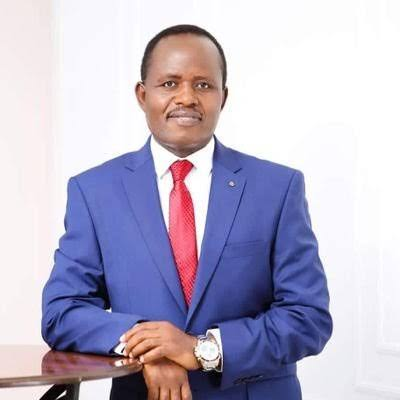
The George Natembeya Biography tells the story of one of Kenya’s most recognizable public administrators turned politician. Over the years, George Natembeya has built a reputation for decisive leadership, particularly during his service in the national administration before transitioning into elective politics. His rise from a district officer to the Governor of Trans Nzoia County reflects decades of experience in governance, security management, and public administration. He resigned as Rift Valley Regional Commissioner in January 2022 to contest elective office and later won the Trans Nzoia governorship in the 2022 General Election.
Today, discussions about the George Natembeya Biography extend beyond his administrative career. Many Kenyans are interested in his educational background, leadership philosophy, family life, achievements, political ambitions, and his growing influence on national politics. His outspoken approach to governance has earned him both supporters and critics, making him one of the country’s most closely watched county leaders. As Governor of Trans Nzoia, he has emphasized healthcare, infrastructure, education, youth empowerment, and accountable county administration.
Quick Facts
| Fact | Details |
|---|---|
| Full Name | George Natembeya |
| Year of Birth | 1971 |
| Age | 55 (as of 2026) |
| Nationality | Kenyan |
| Profession | Politician, Former Civil Servant |
| Current Position | Governor of Trans Nzoia County |
| Political Party | Democratic Action Party–Kenya (DAP-K) |
| Education | University of Nairobi (Bachelor’s & Master’s in Anthropology) |
| Previous Position | Rift Valley Regional Commissioner |
| Marital Status | Married |
| Children | Three (reported) |
Early Life and Background
Birth and Childhood
Any comprehensive George Natembeya Biography begins with his roots in Trans Nzoia County, Kenya, where he was born in 1971. Growing up in one of Kenya’s agriculturally productive regions exposed him to the everyday realities facing rural communities. Agriculture formed the backbone of the local economy, while public services and infrastructure continued to evolve alongside Kenya’s development. These early experiences appear to have influenced his later emphasis on improving governance, public service delivery, and security in underserved communities.
Although many aspects of his childhood remain private, available public records consistently portray him as someone who developed an interest in leadership and administration early in life. Unlike politicians who entered public life through business or activism, Natembeya built his reputation through Kenya’s civil service. That administrative background would later distinguish him from many of his political contemporaries and become a defining feature of the George Natembeya Biography.
Family Roots
George Natembeya has generally kept his extended family away from the public spotlight. While his political career has attracted considerable media attention, he rarely discusses his parents or siblings publicly. This preference for privacy has allowed attention to remain focused on his work in government rather than on his personal background.
His roots in western Kenya continue to influence his political identity. Supporters frequently point to his understanding of rural development, agriculture, and local governance as evidence of his close connection with the communities he serves. These experiences have helped shape his image as a practical leader who combines administrative discipline with grassroots engagement.
George Natembeya Age
One of the most searched topics related to the George Natembeya Biography is his age. Publicly available information indicates that George Natembeya was born in 1971, making him 55 years old in 2026.
His age places him among a generation of Kenyan leaders who accumulated extensive experience in the civil service before seeking elective office. By the time he entered politics, he had already spent decades managing security, coordinating government operations, and overseeing public administration in different parts of the country. This combination of maturity and administrative experience became a major talking point during his campaign for governor and continues to shape public perceptions of his leadership.
Education
Education forms an important chapter in the George Natembeya Biography because it provided the academic foundation for his long public service career.
Public records indicate that Natembeya earned both a Bachelor’s Degree in Anthropology and a Master’s Degree in Anthropology from the University of Nairobi. He also received professional public administration training through the Kenya School of Government, equipping him with leadership and governance skills that complemented his academic studies.
Anthropology may seem like an unusual discipline for a future administrator, yet it offers valuable insights into human behavior, culture, conflict resolution, and community dynamics. These competencies proved relevant throughout his career, particularly when he managed security challenges in diverse regions of Kenya. His educational background therefore strengthened both his analytical abilities and his understanding of the social issues affecting communities under his administration.
Early Career
George Natembeya’s professional journey began in Kenya’s public service, where he steadily rose through the ranks of the provincial administration. Rather than entering politics immediately, he built decades of practical experience in government operations. His assignments included serving as a District Officer, District Commissioner, County Commissioner, and eventually Rift Valley Regional Commissioner. Along the way, he developed a reputation for firm decision-making and hands-on leadership in areas facing complex administrative and security challenges.
His progression illustrates how experience accumulated over many years can prepare a leader for higher office. Each posting expanded his responsibilities and exposed him to different regional issues, from local governance to environmental protection and public security. Those experiences later became central themes in his political campaigns, where he presented himself as a leader with proven administrative credentials rather than one relying solely on political rhetoric.
Rise in Public Service
The George Natembeya Biography would be incomplete without examining the period that transformed him from a career administrator into one of Kenya’s most recognizable public officials. After joining the Provincial Administration, Natembeya served in several capacities across the country. Each appointment brought greater responsibility, allowing him to sharpen his skills in public administration, conflict resolution, and government coordination. Unlike many public servants whose work remains largely behind the scenes, Natembeya gradually became a familiar figure because of his direct communication style and willingness to address sensitive governance issues publicly.
Throughout his years in government, he worked closely with national security agencies, county administrators, and community leaders. His responsibilities often required balancing security concerns with the need to maintain public confidence in government institutions. Consequently, he developed a reputation for making quick decisions during periods of instability while also emphasizing dialogue where possible. His background in anthropology arguably complemented his administrative duties by helping him understand the cultural and social dynamics influencing local conflicts. As a result, many observers viewed him as a civil servant who combined technical knowledge with practical field experience.
His rise through Kenya’s administrative ranks also reflected consistency rather than sudden political opportunity. Before becoming a household name, he had already spent decades serving in different regions of the country. This long record of service later became one of the strongest pillars of the George Natembeya Biography, especially during his transition from public administration into elective politics.
Rift Valley Regional Commissioner
One of the defining chapters in the George Natembeya Biography is his appointment as Rift Valley Regional Commissioner, one of the most senior administrative positions in Kenya’s national government. The Rift Valley region has historically presented complex governance challenges because of its size, ethnic diversity, economic significance, and occasional security concerns. Serving in such a role demanded strategic planning, effective coordination, and decisive leadership.
During his tenure, Natembeya frequently emphasized the enforcement of government policies, protection of public resources, and maintenance of law and order. He attracted national attention for his strong stance against criminal activities, including concerns over illegal land dealings and insecurity in parts of the region. His public briefings often received widespread media coverage, contributing to his growing national profile. Supporters praised his willingness to confront difficult issues directly, while critics occasionally questioned the tone or methods of some of his public statements.
By late 2021 and early 2022, speculation had intensified regarding his political ambitions. In January 2022, Natembeya resigned from the civil service to pursue elective politics, marking the end of a lengthy administrative career and the beginning of a new chapter. His resignation generated significant public interest because it represented a transition from implementing government policy to seeking a democratic mandate from voters.
Entry into Politics
The transition from administrator to politician represents one of the most significant turning points in the George Natembeya Biography. After decades in public service, Natembeya announced his intention to contest the governorship of Trans Nzoia County during Kenya’s 2022 General Election. His decision attracted national attention because he entered politics with substantial administrative experience but without a previous record of holding elective office.
Campaigning allowed him to present himself differently from many traditional politicians. Instead of relying primarily on campaign promises, he frequently highlighted his years of service within government institutions. He argued that effective leadership required discipline, accountability, and measurable results rather than rhetoric alone. His campaign focused on improving healthcare, strengthening agriculture, enhancing education, expanding infrastructure, creating employment opportunities for young people, and promoting transparent county governance.
Natembeya contested the election under the Democratic Action Party–Kenya (DAP-K) banner. His message resonated with many voters who believed his administrative background would translate into efficient county leadership. Consequently, he won the gubernatorial election and officially assumed office as the Governor of Trans Nzoia County after the 2022 General Election.
Governor of Trans Nzoia County
Winning the governorship marked another milestone in the George Natembeya Biography because it shifted his responsibilities from implementing national government policies to leading a devolved county government. As Governor, he assumed responsibility for managing county resources, overseeing development projects, and improving service delivery across sectors such as healthcare, agriculture, roads, education support, and water services.
One of his priorities has been strengthening healthcare infrastructure and improving access to medical services. County investments have included upgrading health facilities, supporting healthcare workers, and expanding access to essential services. Agriculture has also remained central to his administration because Trans Nzoia is widely recognized as one of Kenya’s leading food-producing counties. Accordingly, county programs have sought to support farmers through improved extension services, infrastructure development, and agricultural value chains.
Youth empowerment has also featured prominently in his leadership agenda. His administration has spoken about creating opportunities through vocational training, entrepreneurship initiatives, and employment-focused programs. Alongside these efforts, he has repeatedly emphasized transparency, prudent financial management, and accountability in county administration. These priorities continue to shape public discussions surrounding the George Natembeya Biography and his performance as governor.
Leadership Style
Leadership remains one of the most frequently discussed aspects of the George Natembeya Biography. Throughout both his administrative and political careers, Natembeya has projected an image of firmness, discipline, and direct communication. Rather than avoiding controversial topics, he often addresses governance challenges openly, even when his remarks generate political debate.
Supporters appreciate this straightforward approach because they view it as evidence of honesty and accountability. They argue that his willingness to speak candidly distinguishes him from leaders who avoid difficult conversations. At the same time, critics occasionally contend that his communication style can appear confrontational. Despite differing opinions, both supporters and critics generally acknowledge that his leadership attracts significant public attention.
His administrative background has also influenced how he approaches governance. Decision-making under his leadership often emphasizes planning, institutional coordination, and measurable implementation. This reflects the habits developed during decades of service within Kenya’s public administration. Consequently, the George Natembeya Biography portrays a leader whose management style combines bureaucratic discipline with increasingly active political engagement.
Major Achievements
The George Natembeya Biography highlights achievements spanning both public administration and county leadership. Although political observers may differ in their assessments of individual policies, several accomplishments have consistently featured in discussions about his career.
| Area | Notable Achievement |
|---|---|
| Public Administration | Rose through multiple senior administrative positions before becoming Regional Commissioner. |
| National Leadership | Served as Rift Valley Regional Commissioner with responsibility for coordinating government operations. |
| Politics | Successfully transitioned from civil service to elective politics in 2022. |
| County Leadership | Elected Governor of Trans Nzoia County. |
| Governance | Advocated accountability, transparency, and improved public service delivery. |
| Agriculture | Promoted initiatives supporting one of Kenya’s key agricultural counties. |
| Healthcare | Supported improvements in county health services and infrastructure. |
His ability to transition successfully from a non-partisan administrative career into competitive politics remains one of his most notable achievements. Many civil servants attempt similar transitions, yet comparatively few secure high-level elective office on their first attempt. Natembeya’s victory therefore demonstrated significant public confidence in his administrative record.
Awards and Recognition
Unlike some public figures, George Natembeya has not built his reputation primarily around receiving numerous international awards. Instead, much of the recognition reflected in the George Natembeya Biography comes from his appointments to increasingly senior positions within Kenya’s public administration. Such appointments generally indicate confidence from successive governments in an individual’s administrative capabilities.
His election as Governor of Trans Nzoia also represents a form of public recognition, reflecting the trust placed in him by county voters. Political analysts frequently cite his extensive government experience as one of the defining strengths that distinguishes his leadership profile from many first-time politicians.
Publications and Public Speaking
As of mid-2026, there are no widely documented books or academic publications authored by George Natembeya. Instead, his influence has largely come through official speeches, public policy discussions, interviews, and county development agendas rather than published literary works.
His speeches often focus on governance reforms, accountability, public service delivery, national unity, youth empowerment, and agricultural development. Because of his direct communication style, many of these speeches receive significant media coverage and contribute to ongoing national political discussions.
George Natembeya Net Worth
The George Natembeya Biography naturally raises questions about his financial status. However, no verified public source provides an authoritative figure for his personal net worth. Estimates circulated online vary considerably and are not supported by audited financial disclosures or official government records.
His income has historically come from two primary sources:
- Salaries earned during his long career in Kenya’s civil service.
- Salary and allowances associated with serving as Governor of Trans Nzoia County.
Because reliable financial documentation is unavailable, assigning a specific net worth would be speculative. Readers should therefore treat unofficial estimates with caution until verified information becomes publicly available.
Wife and Family
Another topic frequently searched alongside the George Natembeya Biography concerns his family life. George Natembeya is married and has children, although he deliberately keeps much of his family life private. Unlike many politicians who regularly feature relatives during public campaigns, Natembeya has generally chosen to shield his immediate family from continuous media attention.
This approach reflects a broader effort to separate public service from personal life. While he occasionally acknowledges family support, detailed information regarding his wife and children is limited in publicly available records. As a result, verified reporting focuses primarily on his professional achievements rather than private family matters.
Maintaining this level of privacy has enabled him to keep public attention centered on governance and policy issues instead of personal affairs. Consequently, discussions within the George Natembeya Biography continue to emphasize leadership, administration, and political development rather than family publicity.
Challenges
The George Natembeya Biography reflects a leadership journey marked by both achievements and significant challenges. Transitioning from a career in public administration to elective politics meant adapting to a very different environment. As a Regional Commissioner, Natembeya operated within the national government’s administrative framework, where decisions followed established bureaucratic structures. As Governor of Trans Nzoia County, however, he has had to balance political expectations, county assembly oversight, budget constraints, and public demands while delivering tangible development outcomes.
Like many county governments in Kenya, Trans Nzoia has faced challenges related to funding, infrastructure needs, healthcare delivery, youth unemployment, and agricultural modernization. Natembeya has frequently stated that addressing these issues requires prudent financial management and stronger collaboration between the national and county governments. At the same time, political competition has intensified as the country moves toward the 2027 General Election, placing additional scrutiny on his leadership and policy decisions. These realities illustrate that effective county leadership involves navigating both administrative responsibilities and complex political dynamics.
Controversies
No comprehensive George Natembeya Biography would be complete without discussing the controversies that have accompanied his public career. As an outspoken leader, Natembeya has often attracted strong reactions from supporters and critics alike. His direct style of communication, particularly during his tenure as Rift Valley Regional Commissioner, occasionally generated public debate over government policy, security matters, and political leadership.
A major controversy emerged in 2025, when the Ethics and Anti-Corruption Commission (EACC) investigated and charged him over alleged procurement and conflict-of-interest offences connected to county projects. Natembeya denied wrongdoing. In March 2026, the High Court quashed the criminal case, ruling that investigators had violated his constitutional rights during the arrest and investigation process. The court found procedural irregularities, barred further prosecution on the same facts, and awarded him damages for the rights violations.
The legal matter did not end entirely at that point. Shortly after the High Court decision, the Office of the Director of Public Prosecutions (ODPP) filed a notice of appeal seeking to challenge the ruling. As a result, the broader legal and political discussion surrounding the case has remained active.
The episode illustrates how high-profile political leaders often face intense legal and public scrutiny. Supporters viewed the High Court judgment as vindication, while others argued that the appeal process should be allowed to run its course. Presenting both developments provides a balanced account of this important chapter in the George Natembeya Biography.
Political Influence
The George Natembeya Biography increasingly extends beyond Trans Nzoia County. Since becoming governor, Natembeya has emerged as one of the more prominent political figures in Western Kenya. His public statements on governance, accountability, and national politics have elevated his profile beyond county affairs, leading many analysts to describe him as part of a younger generation challenging established regional political leadership.
Recent political commentary suggests that Natembeya has become an influential figure within Western Kenya’s evolving political landscape. Analysts have noted that his growing popularity has altered regional political dynamics and positioned him as a significant voice ahead of future national elections.
Whether his influence continues to expand will depend on several factors, including his administration’s development record, his relationships with other political leaders, and the broader political environment leading into Kenya’s next general election. Regardless of future outcomes, his rapid rise from senior civil servant to influential governor remains one of the defining features of the George Natembeya Biography.
Legacy
Although George Natembeya remains an active political leader, his legacy is already taking shape. One of his most enduring contributions is his transition from a senior government administrator to an elected county governor, demonstrating that extensive public service experience can provide a foundation for electoral leadership.
Supporters often describe his legacy in terms of discipline, administrative efficiency, and willingness to address difficult issues openly. They point to his emphasis on accountability, public service delivery, and agricultural development as key strengths. Critics, meanwhile, argue that some of his leadership style and political positions have generated unnecessary controversy. These differing perspectives are common for active political leaders and reflect the diversity of public opinion in a democratic society.
Ultimately, the long-term legacy presented in the George Natembeya Biography will be judged by measurable improvements in the lives of Trans Nzoia residents, the sustainability of development projects initiated during his tenure, and his influence on Kenya’s broader political landscape.
Conclusion
The George Natembeya Biography presents the story of a leader whose career has evolved through several important stages. Beginning as a public administrator, he steadily advanced through Kenya’s provincial administration before serving as Rift Valley Regional Commissioner. That extensive experience provided the foundation for his successful entry into elective politics and eventual election as Governor of Trans Nzoia County.
Throughout his career, Natembeya has built a reputation for decisive leadership, direct communication, and a commitment to public administration. His journey has also included legal challenges, political competition, and intense public scrutiny, all of which have contributed to his national profile. The High Court’s 2026 decision quashing the corruption case against him marked a significant legal milestone, although subsequent appellate proceedings indicate that the broader legal process continues.
As Kenya’s political landscape continues to evolve, George Natembeya remains one of the country’s closely watched county leaders. Whether viewed as a reform-minded administrator, an influential regional politician, or a potential national figure, his career continues to attract widespread public interest. For readers seeking a comprehensive George Natembeya Biography, his story illustrates how experience in public service, combined with political ambition, can shape a significant leadership journey.
Frequently Asked Questions (FAQs)
1. Who is George Natembeya?
George Natembeya is a Kenyan politician and former senior civil servant who currently serves as the Governor of Trans Nzoia County. Before entering politics, he served in several senior administrative positions, including Rift Valley Regional Commissioner.
2. How old is George Natembeya?
Based on publicly available information, George Natembeya was born in 1971, making him 55 years old as of 2026.
3. What is George Natembeya’s educational background?
He holds both a Bachelor’s Degree and a Master’s Degree in Anthropology from the University of Nairobi and has also undertaken professional training in public administration.
4. Is George Natembeya married?
Yes. George Natembeya is married and has children, although he keeps details about his family largely private.
5. What is George Natembeya’s net worth?
There is no officially verified public figure for George Natembeya’s net worth. Any estimates circulating online should be treated as unverified.
6. What controversy has George Natembeya faced?
In 2025, he faced corruption-related charges connected to county procurement. In March 2026, the High Court quashed those charges, finding that his constitutional rights had been violated during the investigation and arrest. The ODPP later filed an appeal against that ruling.
7. Why is George Natembeya influential in Kenyan politics?
His influence stems from decades of public administration experience, his election as Governor of Trans Nzoia County, and his growing political profile in Western Kenya, where analysts view him as an emerging regional leader.