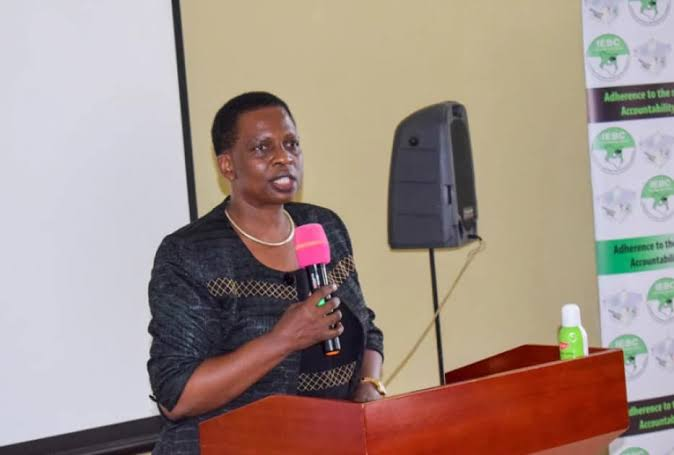
Introduction
The Ruth Kulundu biography tells the story of a Kenyan public servant whose professional journey has been shaped by leadership, resilience, and extensive experience in election management. Although many Kenyans first heard her name during the political events surrounding the 2022 General Election, her career stretches back decades. She built her reputation long before becoming one of the country’s most recognized election administrators.
Throughout her career, Ruth Kulundu has worked in both the private and public sectors, gradually rising through the ranks because of her expertise in governance, organizational management, and electoral administration. Her appointment as Deputy Commission Secretary (Operations) at Kenya’s Independent Electoral and Boundaries Commission (IEBC) placed her among the institution’s top executives, responsible for coordinating critical election operations across the country.
Her professional path has not been without challenges. Court cases, disciplinary disputes, and intense public scrutiny placed her at the center of national conversations about electoral management. Yet she remained one of the commission’s most experienced officials, continuing to serve in senior leadership while contributing to preparations for Kenya’s electoral processes. As of 2026, she remains a prominent figure within the IEBC leadership structure.
This comprehensive Ruth Kulundu biography explores her early life, education, career development, achievements, leadership style, controversies, family, estimated net worth, and lasting contribution to Kenya’s democratic institutions.
Quick Facts
| Detail | Information |
|---|---|
| Full Name | Ruth Khatievi Kulundu |
| Known For | Deputy Commission Secretary (Operations), IEBC |
| Nationality | Kenyan |
| Profession | Election Management Expert |
| Current Role | Deputy Commission Secretary (Operations), IEBC |
| Education | Bachelor of Commerce, MBA (Strategic Management), University of Nairobi |
| Professional Memberships | ACII, AIIK, Chartered Institute of Arbitrators (Kenya Chapter) |
| Years of Experience | More than 20 years in public and private sectors |
| Notable Employer | Independent Electoral and Boundaries Commission (IEBC) |
Early Life and Background
Publicly available information about Ruth Kulundu’s childhood remains limited, reflecting her preference to keep her private life away from media attention. Unlike many public personalities who frequently discuss their upbringing, Kulundu has consistently focused on her professional work rather than personal publicity.
What is known is that she pursued higher education at the University of Nairobi, laying the foundation for a career in finance, management, and public administration. Those academic choices later positioned her for leadership roles requiring analytical thinking, organizational planning, and strategic decision-making. Over time, she combined academic knowledge with practical experience, enabling her to navigate increasingly complex responsibilities within Kenya’s electoral management system.
Her career demonstrates a gradual progression rather than overnight success. Each promotion reflected years of accumulated experience, making her one of the most seasoned election administrators in the country.
Age and Personal Information
As of 2026, Ruth Kulundu’s exact date of birth has not been publicly disclosed. Consequently, her precise age cannot be verified through official public records.
She has maintained a relatively private personal profile despite occupying a senior public office. Rather than building a public celebrity image, she has consistently allowed her work and professional record to define her reputation.
This discretion has helped keep the focus on her administrative responsibilities rather than her personal life.
Education
Education plays a central role in the Ruth Kulundu biography because it highlights how she developed the technical and managerial skills required for high-level public service. Her academic journey reflects a strong commitment to leadership, business administration, and professional growth. Rather than limiting herself to a single qualification, she pursued multiple academic and professional credentials that strengthened her expertise in governance, management, and institutional operations.
A solid educational foundation became especially important in her later roles at the Independent Electoral and Boundaries Commission (IEBC), where strategic planning, financial oversight, risk management, and operational coordination form a critical part of everyday responsibilities. As Kenya’s electoral environment became increasingly complex, professionals with multidisciplinary training became essential to maintaining institutional effectiveness.
University Studies
Ruth Kulundu earned a Bachelor of Commerce degree from the University of Nairobi, one of Kenya’s most respected higher-learning institutions. This qualification equipped her with knowledge in accounting, finance, management, economics, and organizational leadership. The degree provided the analytical framework necessary for understanding both private-sector and public-sector operations.
She later advanced her education by obtaining a Master of Business Administration (MBA) in Strategic Management, also from the University of Nairobi. This postgraduate qualification expanded her expertise in organizational leadership, strategic planning, corporate governance, and decision-making. Strategic management became particularly relevant during her leadership roles because election administration requires careful planning, stakeholder coordination, and risk mitigation.
Her MBA demonstrated a commitment to continuous learning and professional excellence. As a result, she became well-positioned for senior executive responsibilities within large organizations.
Professional Qualifications
The Ruth Kulundu biography would not be complete without examining her professional certifications. Beyond traditional academic education, she pursued specialized qualifications that enhanced her technical expertise.
Her professional credentials include:
| Qualification | Institution/Professional Body |
|---|---|
| Associate of the Chartered Insurance Institute (ACII) | Chartered Insurance Institute |
| Associate of the Insurance Institute of Kenya (AIIK) | Insurance Institute of Kenya |
| Member, Chartered Institute of Arbitrators (Kenya Chapter) | CIArb Kenya |
These certifications strengthened her understanding of risk assessment, governance, compliance, dispute resolution, and institutional accountability. Such skills proved valuable throughout her career, particularly when handling sensitive electoral matters involving multiple stakeholders and legal considerations.
Career Journey
One of the most fascinating sections of the Ruth Kulundu biography is her professional journey. Her career demonstrates how dedication, expertise, and continuous development can lead to influential leadership positions. Over more than two decades, she accumulated experience across different sectors before eventually becoming one of the most recognizable administrators within Kenya’s electoral system.
Her career progression reflects both technical competence and organizational leadership. Rather than remaining confined to a single specialization, she developed a diverse professional profile that allowed her to manage complex operations effectively.
Private Sector Career
Before joining the IEBC, Ruth Kulundu built substantial experience in the private sector. During this period, she worked in positions involving management, administration, insurance, governance, and organizational operations.
The private sector exposed her to performance-driven environments where accountability, efficiency, and strategic planning were essential. These experiences helped her develop strong leadership skills and an understanding of how large institutions function.
Many observers believe that this background contributed significantly to her later success in public service. Unlike leaders whose careers develop entirely within government institutions, Kulundu brought valuable private-sector perspectives into public administration.
The experience she gained during these years laid the groundwork for her eventual transition into electoral management and governance.
Joining the IEBC
The next major milestone in the Ruth Kulundu biography came when she joined the Independent Electoral and Boundaries Commission. The IEBC is one of Kenya’s most important constitutional institutions because it oversees elections, voter registration, constituency boundaries, and other critical democratic processes.
Joining such an organization required extensive expertise and a strong understanding of governance systems. As she assumed various responsibilities within the commission, she became increasingly involved in election planning, operational management, and institutional administration.
Her contributions helped strengthen operational frameworks within the commission. Over time, she gained recognition as a capable administrator who could handle complex organizational responsibilities.
Working within the IEBC also exposed her to the intense political environment surrounding elections in Kenya. Every decision made by electoral officials often attracts public scrutiny, making professionalism and impartiality essential qualities.
Rise to Deputy Commission Secretary
Perhaps the most significant chapter in the Ruth Kulundu biography is her rise to the position of Deputy Commission Secretary (Operations).
This role placed her among the commission’s senior-most officials. As Deputy Commission Secretary, she became responsible for coordinating operational activities, supporting election preparedness, overseeing administrative functions, and ensuring effective implementation of institutional policies.
The position required exceptional leadership because election operations involve millions of voters, thousands of polling stations, extensive logistical planning, and coordination with multiple government agencies.
Her appointment reflected confidence in her ability to manage large-scale organizational responsibilities. It also demonstrated the trust placed in her professional judgment and leadership capabilities.
As Deputy Commission Secretary, she played a visible role during key electoral periods, helping guide operational processes that directly affected the country’s democratic system.
Major Achievements
The Ruth Kulundu biography includes several notable professional achievements that highlight her impact on electoral administration in Kenya.
One of her most significant accomplishments has been her contribution to strengthening operational management within the IEBC. Managing election logistics across a country as diverse and geographically extensive as Kenya requires extraordinary planning and coordination. Through her leadership, the commission continued implementing systems designed to support electoral preparedness and institutional efficiency.
Another achievement lies in her longevity within senior leadership positions. Public institutions often experience frequent leadership changes, yet Kulundu maintained relevance through different electoral cycles. Her continued presence reflected institutional confidence in her expertise and experience.
She also played a role in supporting voter registration exercises, election preparations, administrative reforms, and organizational coordination. While election management is always a collective effort, senior officials like Kulundu provide the strategic leadership necessary to execute complex national operations successfully.
Her professional resilience stands out as another major achievement. Despite periods of controversy and legal disputes, she continued serving in leadership roles and remained involved in institutional operations.
That resilience has become one of the defining themes of the Ruth Kulundu biography.
Leadership Style
Leadership often determines whether institutions succeed during periods of pressure. In the case of Ruth Kulundu, observers frequently describe her leadership style as administrative, structured, and process-oriented.
Rather than seeking public attention, she generally focuses on institutional procedures and operational effectiveness. This approach aligns well with the demands of electoral administration, where consistency and adherence to legal frameworks are essential.
Her educational background in strategic management also appears to influence her leadership philosophy. Strategic planning, risk management, and organizational coordination have remained recurring themes throughout her career.
Colleagues and observers often note that election administration requires balancing competing interests while maintaining neutrality. Leaders must make decisions based on law and procedure rather than political considerations.
Kulundu’s career demonstrates a commitment to these principles, even during periods of intense public scrutiny.
The emphasis on institutional processes rather than personal publicity has helped define her professional identity. Consequently, the Ruth Kulundu biography remains primarily a story of administrative leadership rather than political activism.
Role During Kenya’s Elections
A defining chapter in the Ruth Kulundu biography is her involvement in Kenya’s electoral processes through the Independent Electoral and Boundaries Commission (IEBC). Election management is one of the most demanding responsibilities in public administration because every decision has the potential to influence public confidence in democratic institutions. As Deputy Commission Secretary (Operations), Kulundu has been responsible for coordinating operational activities that support the successful conduct of elections, including logistical planning, deployment of election materials, coordination with regional offices, and implementation of operational policies. These duties require exceptional organizational skills, attention to detail, and the ability to work under significant public and political pressure. Official information from the IEBC describes the Deputy Commission Secretary (Operations) as a key executive responsible for overseeing operational functions that enable the Commission to fulfill its constitutional mandate.
The 2022 General Election brought unprecedented public attention to senior IEBC officials. During this period, the Commission faced immense scrutiny from political parties, observers, civil society organizations, and the international community. Although the Commission operates collectively under constitutional and legal frameworks, senior administrators such as Ruth Kulundu played a significant role in ensuring that operational activities continued despite logistical, legal, and political challenges. Election administration extends far beyond polling day. It involves years of planning, procurement, voter education support, staff recruitment, technology management, and coordination among multiple government agencies. Consequently, Kulundu’s responsibilities required balancing operational efficiency with strict compliance with Kenya’s electoral laws.
Her role also involved supporting institutional continuity during periods of leadership transition within the Commission. Whenever changes occurred among commissioners or senior executives, experienced administrators became essential for maintaining organizational stability. This operational continuity contributed to preserving institutional memory and ensuring that ongoing electoral preparations were not interrupted. Throughout these demanding periods, Kulundu remained one of the Commission’s experienced administrators, demonstrating why the Ruth Kulundu biography continues to attract attention among individuals interested in governance, election management, and public administration.
Challenges and Controversies
No comprehensive Ruth Kulundu biography would be complete without examining the challenges that accompanied her career. Senior leadership within an electoral commission naturally attracts close public scrutiny because elections influence national governance and democratic legitimacy. Decisions made by election officials are often questioned, debated, and occasionally challenged in court. As a result, administrators working within the IEBC frequently operate under intense pressure regardless of political outcomes.
One of the most widely reported controversies involving Ruth Kulundu arose after the 2022 General Election when internal administrative disagreements led to disciplinary action within the Commission. Reports indicated that she, together with other senior officials, faced suspension during investigations into administrative matters. These developments generated significant national media coverage because they occurred during a period when the Commission itself was undergoing institutional changes. Although the allegations received widespread publicity, the subsequent legal process became equally important in shaping public understanding of the events.
The controversy highlighted broader institutional challenges rather than focusing solely on individual officials. Kenya’s electoral environment is highly competitive, and electoral institutions often become the subject of legal disputes and political criticism. Consequently, senior administrators must continue performing their duties while responding to investigations, public inquiries, and legal proceedings. Kulundu’s experience illustrates the complexities associated with managing constitutional institutions in politically sensitive environments.
Despite these challenges, her professional record demonstrates resilience. Rather than ending her public service career, the controversies became part of a broader narrative about institutional accountability, administrative due process, and judicial oversight. This period remains one of the most discussed aspects of the Ruth Kulundu biography, reflecting both the pressures of public office and the importance of legal safeguards within democratic institutions.
Court Reinstatement
Following her suspension, Ruth Kulundu sought legal redress through the courts. The Employment and Labour Relations Court considered the circumstances surrounding the disciplinary action and issued orders that affected her employment status. The court proceedings attracted national attention because they touched on questions of administrative fairness, employment law, and governance within an independent constitutional commission.
Court decisions emphasized adherence to due process in employment matters involving public officers. The rulings reinforced the principle that disciplinary processes within constitutional institutions must comply with legal standards and procedural fairness. As a result, Kulundu’s legal challenge became an important reference point in discussions concerning governance and employment practices within independent public bodies.
Her reinstatement demonstrated the role of Kenya’s judicial system in resolving institutional disputes. Rather than allowing disagreements to remain unresolved, the legal process provided a structured mechanism through which competing positions could be examined. This outcome also illustrated the constitutional checks and balances that exist between independent commissions and the judiciary.
The court proceedings added another significant chapter to the Ruth Kulundu biography, emphasizing resilience, respect for legal institutions, and the importance of procedural justice in public administration.
Family and Personal Life
Although Ruth Kulundu occupies one of Kenya’s senior public administrative positions, she has consistently maintained a private personal life. Public records contain very little verified information regarding her spouse, children, or immediate family members. She has rarely discussed family matters during interviews or official public appearances, choosing instead to focus on professional responsibilities.
This approach reflects a broader pattern among many senior career civil servants who distinguish their personal lives from their official duties. Unlike politicians whose family members often appear in campaign events or public engagements, career administrators frequently maintain lower public profiles. Kulundu has followed this tradition by allowing her work to define her public identity rather than personal publicity.
As of 2026, no verified public information confirms details regarding her husband, children, or extended family. Responsible reporting therefore requires acknowledging these limitations rather than relying on speculation. Respecting personal privacy remains particularly important when discussing individuals whose primary public role involves professional administration rather than elected political office.
Consequently, while the Ruth Kulundu biography provides extensive insight into her career, significantly less verified information exists concerning her private family life.
Publications and Professional Contributions
There is currently no public evidence that Ruth Kulundu has authored books or widely distributed academic publications under her name. Nevertheless, her professional contributions extend beyond published works. Throughout her career, she has participated in institutional management, administrative reform, operational planning, and implementation of policies within one of Kenya’s most significant constitutional commissions.
Senior election administrators often contribute to organizational manuals, operational guidelines, internal strategic plans, and election preparedness frameworks that are developed collaboratively rather than individually. Although these documents may not carry individual authorship, they represent substantial professional contributions to institutional development.
Kulundu’s expertise in strategic management, governance, and organizational operations has also influenced decision-making processes within the Commission. Her background in commerce, business administration, insurance, and arbitration equips her with multidisciplinary knowledge that supports effective institutional leadership.
Therefore, while traditional publications may not define her career, her administrative contributions form an important part of the Ruth Kulundu biography by demonstrating practical leadership within Kenya’s electoral system.
Awards and Recognition
Unlike many public figures, Ruth Kulundu has not built her reputation around high-profile awards or public honors. Instead, her recognition primarily stems from her appointment to senior executive positions within the Independent Electoral and Boundaries Commission. Such appointments themselves represent significant professional achievements because they require extensive experience, technical competence, and demonstrated leadership.
Her career progression reflects confidence placed in her abilities by institutional leadership. Remaining in senior management over multiple electoral cycles also indicates sustained professional credibility despite changing political environments and organizational reforms.
Professional recognition may also be observed through her membership in respected professional organizations, including the Chartered Insurance Institute, the Insurance Institute of Kenya, and the Chartered Institute of Arbitrators (Kenya Chapter). These affiliations demonstrate ongoing commitment to professional standards and continuous development.
Although the Ruth Kulundu biography may not include a long list of public awards, her appointments, professional qualifications, and leadership responsibilities collectively represent meaningful recognition within Kenya’s public service sector.
Estimated Net Worth
One of the most searched topics related to the Ruth Kulundu biography is her estimated net worth. However, as of 2026, there are no publicly verified financial disclosures stating Ruth Kulundu’s personal wealth. Neither the Independent Electoral and Boundaries Commission (IEBC) nor other official government sources have published figures regarding her assets or net worth. Therefore, assigning a specific monetary value would be speculative and inconsistent with responsible reporting.
That said, Ruth Kulundu has spent more than two decades in senior management and executive positions across both the private and public sectors. Professionals serving in executive roles within constitutional commissions generally receive competitive remuneration in line with Kenya’s public service salary structures. In addition to a salary, senior officials may receive benefits that include housing, medical cover, pension contributions, and other employment-related allowances as determined by the relevant remuneration authorities.
Although media reports occasionally speculate about the wealth of high-ranking public officials, there is no credible evidence supporting any published estimates for Kulundu’s personal fortune. Readers should therefore rely on official asset declarations if they become publicly available through legally authorized channels. Until such information is disclosed, the most accurate position is that Ruth Kulundu’s net worth remains undisclosed. This commitment to factual reporting strengthens the credibility of the Ruth Kulundu biography by distinguishing verified information from speculation.
Legacy
The Ruth Kulundu biography illustrates how professional administrators can significantly influence democratic institutions even when they remain largely outside the political spotlight. Throughout her career, she has contributed to strengthening operational systems within Kenya’s electoral management framework. Her responsibilities have extended far beyond office administration, encompassing strategic planning, election preparedness, institutional coordination, and organizational leadership during periods of both stability and uncertainty.
One of the defining aspects of her legacy is resilience. Working within the IEBC requires navigating political pressure, legal scrutiny, operational complexity, and constant public attention. Despite these challenges, Kulundu continued serving in senior leadership while emphasizing institutional processes and administrative professionalism. Her experience demonstrates that effective public administration depends not only on visible leadership but also on experienced professionals capable of managing complex operations behind the scenes.
Her educational background has also shaped her legacy. By combining qualifications in commerce, strategic management, insurance, and arbitration, she developed a multidisciplinary perspective that proved valuable in public service. This combination of academic achievement and practical experience provides an example for aspiring public administrators seeking leadership positions within constitutional institutions.
Looking ahead, Ruth Kulundu’s contributions are likely to remain part of Kenya’s broader electoral history. Whether remembered for overseeing operational reforms, managing election logistics, or navigating institutional challenges, her work reflects the important role that career administrators play in sustaining democratic governance. The Ruth Kulundu biography therefore represents more than the story of an individual executive; it also highlights the significance of professional public service in supporting constitutional institutions.
Conclusion
The Ruth Kulundu biography presents the journey of an accomplished Kenyan public administrator whose career has been defined by experience, strategic leadership, and dedication to electoral management. From earning advanced academic qualifications at the University of Nairobi to serving as Deputy Commission Secretary (Operations) at the Independent Electoral and Boundaries Commission, she has steadily built a reputation based on professional competence rather than personal publicity.
Her career reflects the realities of working within one of Kenya’s most scrutinized constitutional institutions. She has participated in election management during critical moments in the country’s democratic development while also navigating legal disputes and administrative challenges. Rather than diminishing her professional standing, these experiences demonstrated the importance of resilience, procedural fairness, and institutional accountability in public service.
Although relatively little verified information exists regarding her family life, age, or personal finances, her public record clearly illustrates substantial contributions to governance and election administration. By maintaining a focus on organizational effectiveness and operational excellence, she has become one of the experienced administrators associated with Kenya’s electoral system.
As public interest in election management continues to grow, the Ruth Kulundu biography remains an important resource for readers seeking to understand the people who help shape democratic institutions behind the scenes. Her story underscores the value of education, professionalism, integrity, and perseverance in building a lasting career in public service.
Frequently Asked Questions (FAQs)
1. Who is Ruth Kulundu?
Ruth Khatievi Kulundu is a Kenyan public administrator who serves as the Deputy Commission Secretary (Operations) at the Independent Electoral and Boundaries Commission (IEBC). She has over two decades of experience in public and private sector leadership, specializing in governance, strategic management, and election administration.
2. What is Ruth Kulundu’s educational background?
She holds a Bachelor of Commerce and a Master of Business Administration (Strategic Management) from the University of Nairobi. She is also professionally qualified through the Chartered Insurance Institute (ACII), the Insurance Institute of Kenya (AIIK), and the Chartered Institute of Arbitrators (Kenya Chapter).
3. How old is Ruth Kulundu?
As of 2026, Ruth Kulundu’s exact date of birth and age have not been publicly disclosed through verified official sources.
4. Is Ruth Kulundu married?
There is no verified public information confirming Ruth Kulundu’s marital status, husband, or children. She has maintained a private personal life throughout her public service career.
5. What is Ruth Kulundu known for?
She is best known for her leadership role within Kenya’s Independent Electoral and Boundaries Commission (IEBC), where she oversees operational functions that support election management and institutional administration.
6. What controversies has Ruth Kulundu faced?
Following the 2022 General Election, she became involved in administrative and legal disputes relating to internal disciplinary processes within the IEBC. Court proceedings later addressed these matters, emphasizing due process and procedural fairness.
7. What is Ruth Kulundu’s net worth?
There are no officially verified figures regarding Ruth Kulundu’s personal net worth. Any estimates circulating online remain unverified, and no official public declaration has confirmed her wealth.